Stir the Embers
Threat Advisory & Board-Level Cybersecurity Counsel

Turn 30 years of threat intelligence into decisions your board can act on today.

Dan Larkin advises boards, executives, and security leaders on the threats bureaucracy keeps them from seeing clearly — drawing on decades inside the FBI, NCFTA, and private-sector security leadership.

Or call directly: (412) 475-2040

Why organizations call Dan
  • 30+ yrsFBI and private-sector cyber & national-security leadership
  • 200+investigators and analysts trained and placed across government and industry
  • NCFTABuilt Global cross-sector public/private threat-intelligence partnerships from the ground up
Why "Stir the Embers"

The cases that never arrived gift-wrapped.

Over three decades in the FBI, I learned that the most significant organized crime and cyber cases almost never showed up ready-made for prosecution. They came from strong intelligence — well-placed informants, cooperating witnesses, and increasingly, sharp subject-matter experts from cross-sector partners willing to dig in alongside law enforcement.

Too often, though, victims who came forward were turned away: told their case wasn't significant enough, that it belonged with another field office, that an overseas actor made prosecution unlikely, or that without a specific loss figure there was nothing to act on. I watched good information go nowhere because the system wasn't built to catch it.

That frustration is what led to building the NCFTA, and it's the same instinct behind this site. There's a kind of passion and clarity that goes dormant in people and organizations when they're told often enough that a threat isn't worth pursuing. My work now is about stirring that back up — helping boards and security leaders stop watching from the sidelines and start building the intelligence, partnerships, and strategy it actually takes to get ahead of a threat, rather than explaining it after the fact.

Dan Larkin pointing to a global cyber threat map, briefing a room on ransomware, phishing, supply-chain attacks, and nation-state actors.
Dan Larkin — Founder, Stir the Embers
About Dan

He's spent a career pushing past "that's not our jurisdiction."

Dan spent more than three decades in the FBI and private-sector security leadership, where he built one of the most unique global public/private threat-intelligence alliances of his time — the National Cyber-Forensics & Training Alliance (NCFTA).

He now advises boards and executives on how to see past organizational blind spots, understand how threats actually develop, and move faster than the bureaucracy around them typically allows.

FBI & Private Sector30+ years across law enforcement, intelligence, and corporate security leadership
NCFTAFounding role in a landmark cross-sector cyber threat-intelligence partnership
200+ placedAnalysts and investigators trained and placed with government & industry partners
Author"Ripping Off the Bureaucratic Blinders" — out now
Ripping Off the Bureaucratic Blinders — book cover, by Dan Larkin

The book behind the mission.

Dan's book lays out how self-imposed institutional boundaries — and no small amount of "institutional arrogance" — keep organizations from seeing the full threat landscape in front of them, and what it actually takes to build effective cross-sector partnerships instead.

Get the book
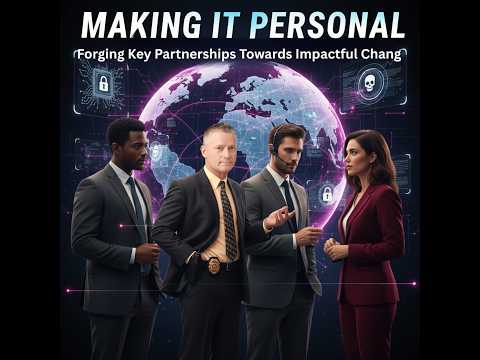
'Making It Personal' podcast series artwork: four professionals in front of a glowing global network globe, with the tagline 'Forging Key Partnerships Towards Impactful Change.'

Podcasts & speaking topics.

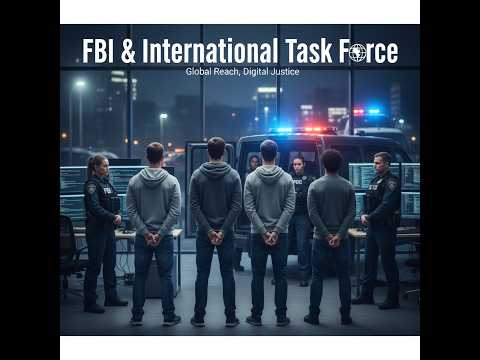
Dan hosts conversations on the "Making It Personal" and International Task Force podcast series, and speaks on the vulnerabilities organizations face today, where government/industry/law-enforcement collaboration breaks down, and what's actually working.

Book Dan to speak
Praise for the Book

What people with the closest view of this work have said.

"Dan Larkin's vision of a platform to drive the substantial public-private sector and global law enforcement collaboration needed to take on significant cyber threats led to the world's first cyber fusion center and was integral to Pittsburgh becoming the center of federal cyber enforcement efforts."
Luke DemboskyFormer Deputy Assistant Attorney General for National Security & Cyber
"Creating teams that can cross bureaucratic boundaries and challenge the status quo are essential, as are the personal leadership traits needed to achieve critical goals. 'Ripping Off the Bureaucratic Blinders' addresses these challenges and the skills we should all aspire to employ as effective leaders."
Admiral Thad AllenCommandant, U.S. Coast Guard (Retired)
"'Ripping Off the Bureaucratic Blinders' should be required reading for those seeking to create effective partnerships between the law enforcement community and the private sector. Dan's book clearly demonstrates the force multiplier that emanates from such alliances."
Michael A. MasonFBI Executive Assistant Director (Retired)
What I Do

Advisory work built for people who have to decide, not just discuss.

Three ways to work together, depending on where your organization needs the most help right now.

A cross-sector investigative team piecing together evidence on a table, representing how threat intelligence gets assembled from scattered sources.
Board & Executive Advisory

Cybersecurity Assessments & Briefings

A candid, outside read on where your organization is genuinely exposed — cutting through internal blind spots and giving your board a threat picture they can actually act on.

Request an assessment
Dan Larkin teaching a cybersecurity analyst training session, with a slide reading 'What makes a Great Cyber Analyst today?' and students taking notes.
Training & Education

Staff & Leadership Training

Practical training for security teams and leadership on how threats actually develop — from emerging AI-enabled schemes to the fundamentals of intelligence-led defense.

Book a training session
Dan Larkin speaking at a podium reading 'Caesars Palace, Las Vegas' at a Black Hat conference.
Keynotes & Panels

Speaking Engagements

Talks and panel appearances on threat intelligence, public/private partnership, and the institutional habits that let preventable breaches happen. Drawn from three decades of cases.

See speaking topics
Beyond the Advisory Work

Initiatives in motion.

Larger cross-sector efforts Dan has proposed or is actively developing, originally detailed on this site's "Next Door" project pages. Each links to the full brief.

Two professionals reviewing server racks in a long, brightly lit data center aisle.
Data centers are not going away. The question is how they can be developed responsibly.
Embracing the AI Future

AI infrastructure growth is inevitable. Irresponsible growth is not.

A framework for community impact, environmental responsibility, economic development, and credible oversight.

AI is already here, and so are the data centers, the business models, and the risks that come with them. Data centers are not going away. The real question is how they can be developed responsibly, so that growth strengthens a region instead of straining it.

I've spent my career bringing government, industry, and academia to the same table before a threat becomes a crisis. AI deserves the same approach: credible impact studies on what data centers mean for local power, water, and jobs; shared governance with clear accountability; and practical guardrails shaped by a cross-sector advisory committee of experts.

The goal is not to slow the AI future. It is to shape it responsibly, with a transparent scoring process and possibly a trusted "stamp of approval," so communities and businesses can move forward with confidence instead of fear.

Guardrails for a Responsible AI Future: a guardrail along a mountain road at sunset, with the words Innovation with safety, Opportunity with oversight, Progress with accountability.
The Foundation: Data vs. Intelligence
"Don't give me your intelligence (or data). Bring it with you."

For decades, the default approach to sharing threat information was "just give us all your data and we'll figure it out." It failed. Data without context created noise, legal exposure, and mistrust.

Data only becomes intelligence when subject-matter experts who understand it work on it together in a neutral, trusted space. That was the model behind the NCFTA, and it's the model this AI effort is built on: the right experts around one table, bringing what they know with them.

Read the Data vs. Intelligence brief
Graphic: a stream of red raw data labeled Data Overload passes through a prism and emerges as gold lines labeled Actionable Intelligence.
Legacy "data dump"Collaborative alliance
"Give us your data""Bring your data and your SMEs"
Government / law-enforcement silosNeutral, peer-to-peer space
SMEs disconnected from analystsCross-sector SMEs working side by side
Noise, delay, and liabilityHigh-context, actionable value
Where the work is focused
01 Community ImpactWho benefits, and who carries the burden? +

Growth brings real benefits and legitimate concerns. Every major project should be evaluated for its effect on the surrounding community, not just the project site, over both the short and long term. Evidence should inform approvals, incentives, and ongoing accountability.

Potential positives

  • Jobs and new investment
  • Tax revenue and a stronger tax base
  • Infrastructure upgrades
  • School and workforce partnerships
  • Regional growth and a technology ecosystem

Potential negatives

  • Strain on utilities, power, and water
  • Noise, traffic, and land-use conflicts
  • Environmental concerns
  • Limited employment after construction
  • Uneven benefit and weak oversight
02 Environmental Impact: Power, Water & WastewaterPlan for total demand and the full water cycle, realistically and in public. +

Power

  • Assess total demand, grid reliability, peak load, electricity source, carbon footprint, and backup power
  • Renewable procurement, on-site generation, and battery storage
  • Demand response, grid modernization, waste-heat reuse, and advanced cooling
  • Small modular reactors explored where appropriate

Water

  • Forecast needs against local availability, drought risk, and residential, agricultural, and industrial demand
  • Closed-loop, air-cooled, or hybrid cooling
  • Reclaimed or non-potable water, recycling, and usage caps
  • Public reporting and watershed impact analysis

Wastewater

  • Volume and treatment requirements
  • Local system capacity, permitting, and chemical discharge risk
  • Pre-treatment and zero-liquid discharge where feasible
  • Emergency containment and third-party monitoring
03 Economic Impact: Near Term & Long TermHow much of the value stays in the community, and for how long? +

Near term: construction

  • Construction jobs, engineering, and skilled trades
  • Local contractors and community spending
  • Infrastructure improvements, permit fees, and tax revenue
  • The key question: how can local workers and businesses take part?

Long term: operations

  • Permanent employment may be smaller than the construction surge, so job quality matters
  • Operations, cybersecurity and IT, facility management, and energy and utility roles
  • Local suppliers and adjacent industries
  • Wages, training, local hiring, and long-term tax contribution
04 Responsible Regulation & Shared GovernanceOversight should not live at only one level. +

A credible framework makes expectations visible before incentives and approvals are granted: impact studies, environmental and water disclosures, energy plans, community-benefit and workforce commitments, compliance reporting, independent audits, and incentive clawbacks. Federal, state, and local responsibilities are different, and they complement each other.

Federal

  • Standards
  • Cybersecurity and national security
  • Interstate coordination

State

  • Incentives and utility regulation
  • Permitting
  • Workforce and infrastructure planning

Local

  • Zoning and community review
  • Tax agreements and public hearings
  • Emergency planning

Recommendation: shared governance with clear accountability.

05 A Cross-Sector Advisory CommitteeConsequential, not symbolic: the right expertise around one table. +

Who's at the table

  • Government, economic development, and utilities
  • Power, environment, and legal/regulatory experts
  • Technology, manufacturing, and financial services
  • Community, workforce, and education leaders

What it does

  • Reviews impact studies and recommends approval criteria
  • Develops the scoring framework
  • Assesses community-benefit plans
  • Monitors compliance and recommends incentive eligibility
  • Updates standards as the landscape changes
06 Scoring, Certification & AccountabilityThe same questions for every project, with the tradeoffs made visible. +

Example scoring model

  • Energy responsibility25%
  • Water stewardship20%
  • Community benefit20%
  • Economic impact15%
  • Environmental sustainability15%
  • Transparency & accountability5%

Illustrative weighting. 90–100 exemplary • 75–89 responsible with minor conditions • 60–74 conditional • below 60 major revisions.

Certification: a visible stamp of responsible development

  • Gold: exceeds standards
  • Silver: strong responsible-development standards
  • Bronze: minimum responsible standards
  • Conditional: improvement and monitoring required

Tie incentives to measurable commitments

  • Incentives: tax abatements, infrastructure support, expedited permitting, workforce grants, energy partnerships
  • Accountability: milestones, annual reporting, independent audits, benefit tracking, clawbacks, public scorecards
Business leaders, a utility engineer in a hard hat, and community representatives shaking hands outdoors at sunset.
Cross-sector expertise around one table: government, industry, utilities, and community.
The recommended path forward
  1. 1Define responsible guardrails
  2. 2Require credible impact studies
  3. 3Establish a cross-sector advisory committee
  4. 4Create a transparent scoring process
  5. 5Determine whether certification is appropriate
  6. 6Tie incentives to performance
  7. 7Review and update standards regularly
  8. The goalShape the AI future responsibly, not slow it down
Join the conversation

If you work in government, utilities, technology, manufacturing, financial services, or community development and want a seat at this table, I'd like to hear from you.

Field Notes

Insights worth reading before your next board meeting.

Short, pointed write-ups on complacency, intelligence development, and the institutional habits that let preventable threats through.

Dan Larkin on a headset alongside three co-hosts in front of a screen reading 'Making It Personal — Forging Key Partnerships Towards Impactful Change,' with a world map graphic behind them.
Watch & Listen

Making It Personal & the ITF podcast series.

Conversations on threat intelligence, cross-sector partnership, and the origins of the International Task Force — including why it started in Pittsburgh.

Get In Touch

Let's talk about what your organization is missing.

Tell me a little about your organization and what you need — an assessment, a training session, or a speaker — and I'll follow up directly.

Send inquiry
Visit
27107 Nature View Street
Leesburg, FL, USA